
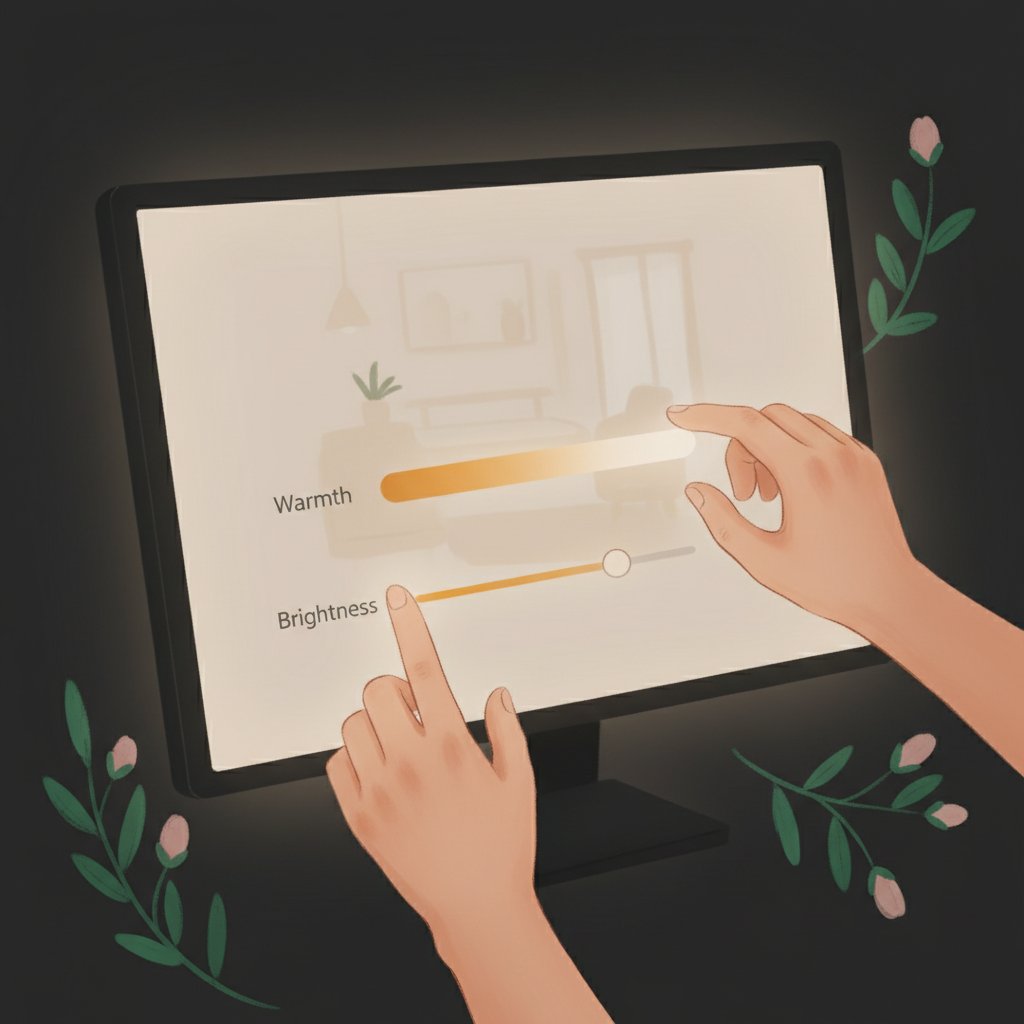
Adjusting screen display settings to prevent visual triggers
Tip from androidauthority.com. · Read the original post
One writer found that tailoring their digital displays significantly reduced screen-triggered attacks. They enabled dark mode, shifted the screen to its warmest color temperature, manually lowered the brightness, and turned on a higher refresh rate to minimize scrolling stutter. Calibrating these built-in software settings or using third-party display tools can help create a smoother, more comfortable visual environment for daily work.
What you'll need
You only need one of these — not all of them.
The original tip uses
Device display settings
Blue-light filter screen overlay
Third-party screen dimming software
Is this a trigger for you?
Cast your vote to see how other people answered.
Familiar with it
Haven't tracked it yet
What the research says
Research is mixed
- Blue-light-filtering spectacle lenses in managing vision-related symptoms: an updated review. (2026)
Blue-light-filtering spectacle lenses showed promise in neurological areas, including reducing migraine frequency and regulating sleep, but their efficacy in reducing digital eye strain and visual fatigue was inconclusive across most studies. This review examined spectacle lenses rather than direct software-based display adjustments.
- Visual stimuli are common triggers of migraine and are associated with pattern glare. (2006)
People with migraine experienced significantly more illusions and pattern glare from striped visual stimuli, and they frequently selected colored filters—predominantly in the blue-to-green spectrum—to improve visual comfort. The study examined colored filters and visual triggers rather than built-in display calibration or warm temperature settings.
- From the Ocular Surface to Neurophysiology: An Integrative Review of Digital Eye Strain. (2026)
A review of 128 studies identified device-related optical stress and cognitive load—which reduces blinking and destabilizes accommodation—as key drivers of digital eye strain. The study focused on digital eye strain rather than migraine attacks and evaluated broad ergonomic and optical interventions rather than specific software display calibrations.
Continued reading
- From our NotesEffective Relief & Prevention for Menstrual MigrainesEffectively manage menstrual migraines with early treatment, prevention tips, and expert advice on handling hormonal headaches. Discover migraine relief strategies today.
- From our NotesHumidity Migraines: Causes, Symptoms & ReliefDiscover the causes of humidity migraines and effective relief strategies. Learn how to prevent weather-induced migraine symptoms with practical tips.
Related tips
 Avoiding grocery store sensory triggers to prevent attacksOne person found they could prevent store-triggered…
 Switching to a loose bun to reduce scalp tensionTight hairstyles can cause external-traction tension…
 Cushioning salon sinks to prevent scalp and neck painOne person found that the hard edge of a hair salon…
Experiences
Is this your post or tip? Update info, or request removal →
This is educational material and practical tracking tools. It is not medical advice. Always consult a qualified doctor.